 English
  සිංහල
සිංහල  தமிழ்
தமிழ்  Español
  Русский
  العربية
  Türkçe
  日本語
日本語  हिन्दी
  简体中文
简体中文  Deutsch
  한국어
한국어  فارسی
فارسی 
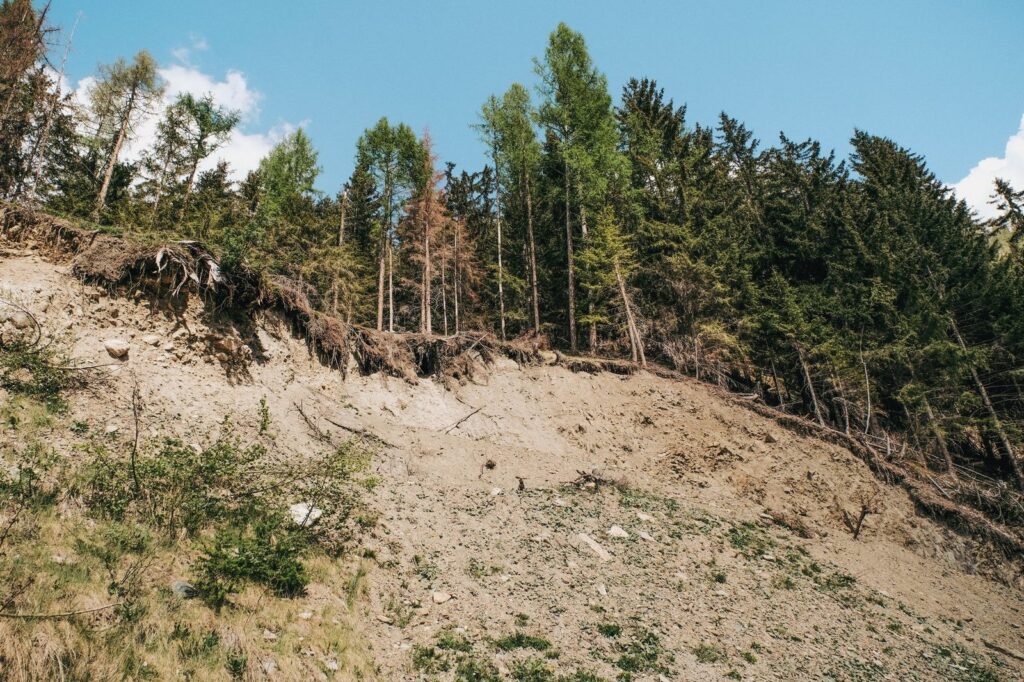

Coir logs, coir blankets and woven coir mesh are used to hold soil on slopes, riverbanks and wetland edges while plants take root. Most of the world’s supply comes from Sri Lanka and India. This guide is for erosion control distributors, landscape and civil contractors, and restoration firms buying coir products in volume.
The three main products
| Product | What it is | Where it is used |
|---|---|---|
| Coir logs (fibre rolls) | Coir fibre packed into a tube of netting | Streambank toes, shorelines, wetland edges, slope breaks |
| Woven coir mesh | Open grid woven from coir yarn, sold by g/m2 | Steep slopes, channels, high-flow banks |
| Coir blankets | Loose fibre stitched between netting | Seeded slopes, road cuttings, moderate flows |
How projects specify them
Coir logs
- Diameter: commonly 9, 12, 16 or 20 inches (about 22 to 50 cm).
- Length: often 10 or 20 ft (about 3 or 6 m).
- Density: how tightly the fibre is packed, often stated in pounds per cubic foot or kg per cubic metre. Higher density lasts longer and weighs more.
- Netting: coir twine for a fully natural log, or polypropylene where it is allowed.
Woven mesh and blankets
- Mass per area: 400, 700 and 900 g/m2 are the common woven weights.
- Tensile strength in each direction, and open area (how much of the surface is open for plants).
- Roll width and length.
- Expected service life, often stated in years.
Approved-products lists
Many US state departments of transportation, and some agencies elsewhere, keep lists of erosion control products that are pre-approved for their projects. Contractors buy from those lists, usually through distributors. The listing belongs to the brand or distributor that registered the product and supplied the test data, not to the mill that made it. A Sri Lankan mill therefore usually reaches these projects through a distributor’s brand, and the distributor will want consistent specifications and test reports lot after lot.
Quality points to check
- Fibre: brown coir from mature husks, with low impurity and consistent length.
- Weight tolerance: check the mass per area or log weight against the order on arrival.
- Moisture: wet coir gains weight and can grow mould in a container. Ask for dry shipping and moisture data.
- Phytosanitary rules: coir is a plant product. Most importing countries ask for a phytosanitary certificate, and some set extra conditions. Check before ordering.
Packing and shipping
Logs are bulky, so they ship well below a container’s weight limit. Blankets and mesh are rolled and can be compressed. Mixing logs, mesh and blankets in one container is common and cuts the freight cost per item. HS codes are usually in heading 5305 for coir fibre or 5702 and 5911 for products, depending on construction; confirm the classification with your customs broker.
What to send for a quote
- Products, sizes, density or g/m2, and netting type.
- The project specification or approved-products listing you need to match.
- Quantity, destination port and Incoterm.
Our listings: coir logs, coir blankets and woven mesh and coir geotextiles and mats. For growing media, see our coco peat guide.
Quote coir erosion control products
Send your specification; we quote mixed containers of logs, mesh and blankets from Sri Lankan mills.